

Yunex Traffic delivers intelligent signal control solution for vehicles, cyclists and pedestrians on historic Nith Bridge

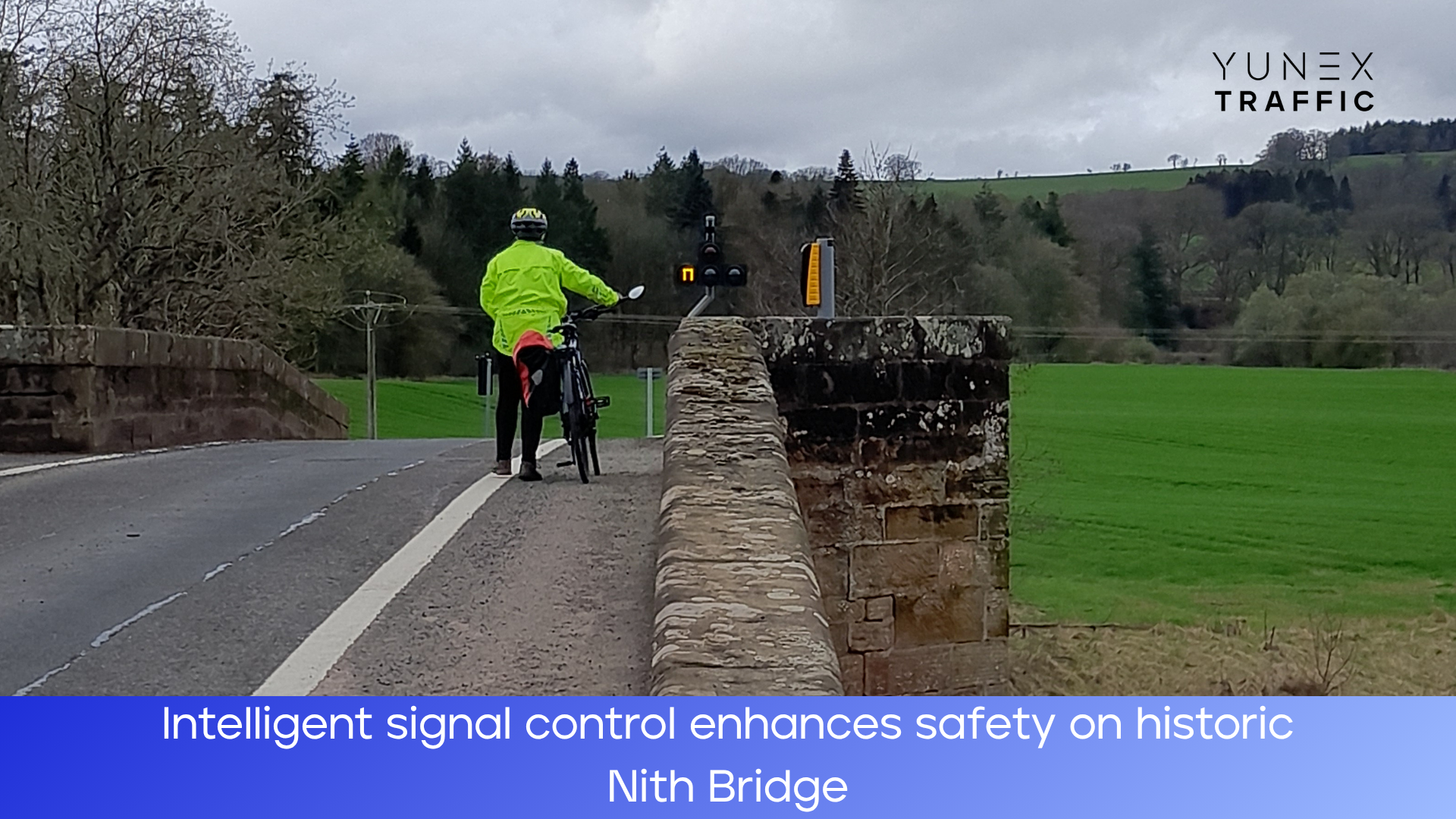
- Yunex Traffic has commissioned a Plus+ traffic signal and control solution on the historic Nith bridge near Thornhill in Dumfries and Galloway.
- The Category A listed stone arch bridge is 45-metre long, but only 5.0 metres wide and has no footways; traffic in the past gave way informally, with refuges available for pedestrians.
- Designed to run under MOVA control, Yunex Traffic’s fixed clearance timing solution makes crossing the bridge safer for pedestrians and cyclists; this also allows pedestrian countdown timers to be fitted to give reassurance to users as they are crossing.
Yunex Traffic has delivered a new Plus+ traffic signal and control solution for Dumfries and Galloway Council on the historic Nith Bridge, a 45-metre-long, 5.0-metre-wide, stone arch structure on the A702.
Until now, the Grade A listed bridge operated without signal control, with vehicles giving way informally and pedestrians relying on narrow refuges within the cutwaters for safety. The newly commissioned system provides fully-signalled control for all users, enhancing safety while respecting the structure’s historic character.
To support the council’s aim of creating a safer pedestrian and cycle link across the bridge, Yunex Traffic, working with leading active travel engineering consultancy Transport Planning & Engineering (TP&E), designed, supplied and installed a shuttle signal system, featuring the company’s Plus+ traffic control and Yutraffic Actis signal head technologies.
Given the width and historic importance of the bridge, the Plus+ system’s distributed architecture provided the perfect solution and eliminated the need to route heavy 20-core copper cable across the bridge – a requirement of traditional ELV signalling solutions.
In designing the scheme, a number of signalling strategies were considered, including on‑crossing pedestrian detection. However, due to the bridge’s length, lack of footways, and the possibility that pedestrians may pause to enjoy the views while crossing, a fixed clearance timing approach was ultimately chosen. An all-red phase provides pedestrians and cyclists with sufficient time to cross safely, without relying on detection systems.
Commissioned at end of March, the scheme incorporates MOVA control and rest on red, and includes cycle detection. To further improve pedestrian confidence and reduce dilemma zones on what is one of the longest crossings of its kind in the UK, the design also includes both near‑side and far‑side pedestrian countdown indicators, as well as audible signals, tactile cones and angled tactile paving.
Wilke Reints, Managing Director Yunex Traffic UK, said: “This project is a perfect demonstration of the capability and versatility of our Plus+ solution across a wide range of applications. The unique requirements of the Nith Bridge scheme were fully met by Plus+, thanks to its innovative architecture, and minimal cabling and civil works. We were able to deliver all the components needed for this of this clever design, which will improve safety for all bridge users.”
Rowena Colpitts, Head of TP&E said: “This has been an exciting project to work on with the local community group KPT Development Trust. It has been a long held aspiration to link the two Dumfriesshire villages and the route over the bridge has caused consternation for as long as people and traffic have been mixing on it. Now a seamless interface has been set up where pedestrians and cyclists can move easily and safely across the bridge with quick and reactive signalling for vehicles. This has greatly lowered frustration and created a good example of how existing infrastructure can be altered to accommodate all road user needs.”
The scheme shows how sensitive, intelligent traffic control can enhance safety and accessibility while preserving the character of historic infrastructure for future generations.
The ITS UK Member News Service shares announcements and press releases from member organisations. The content is solely the responsibility of the issuing organisation and does not imply endorsement by ITS UK.