

Connecting Passenger Communication to Live Operations

National Express operates the UK’s largest scheduled coach network, running high-frequency services across hundreds of intercity and airport destinations. While passengers could already use onboard SMS feedback codes, these were primarily retrospective, supporting post-journey service follow-up rather than live operational response.
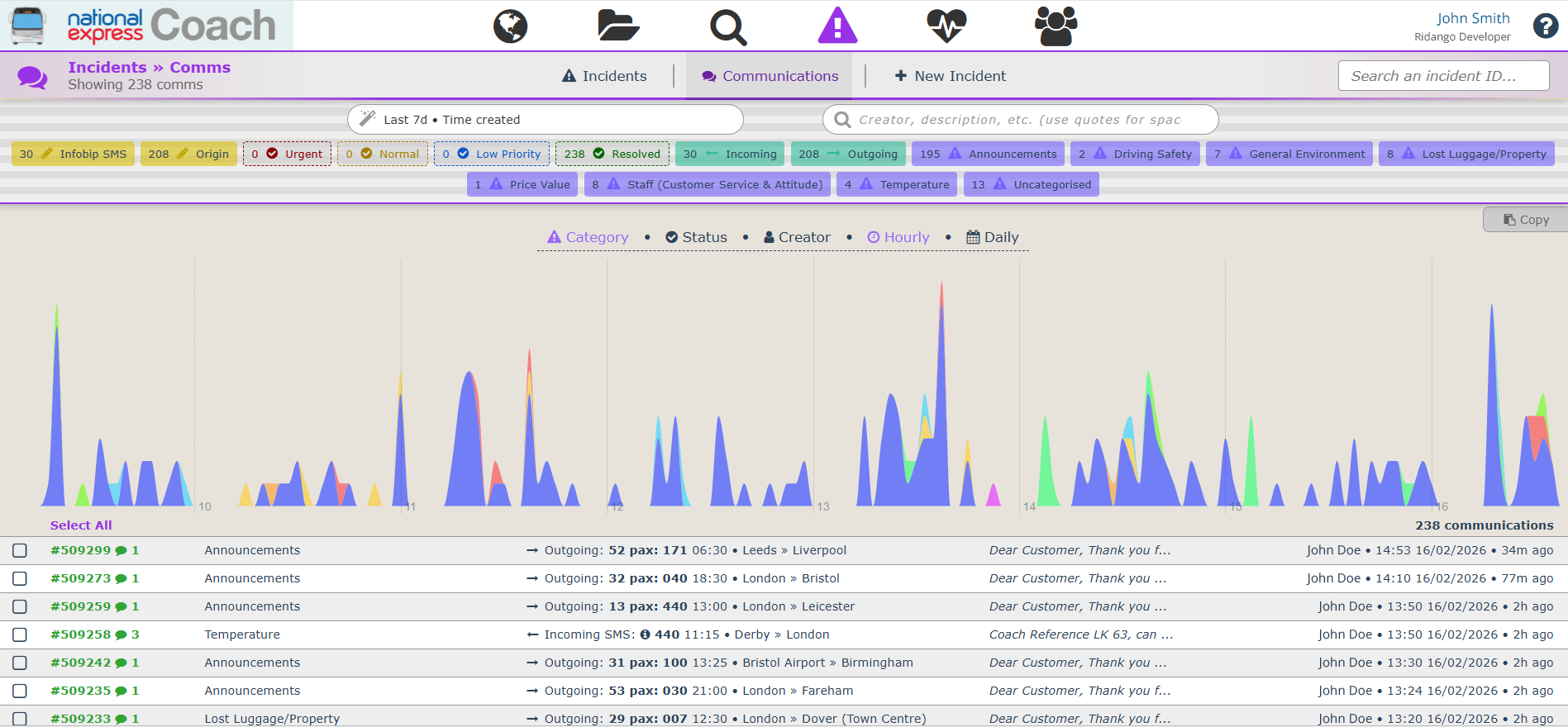
The issue was not a lack of feedback. It was the absence of operational visibility at the moment issues occurred. When passengers experienced delays, connection risks, onboard comfort concerns, staff conduct issues, or safety incidents, their messages did not connect to live service management. Feedback existed, but it sat outside operational workflows.
National Express integrated passenger SMS communication directly into Ridango Data Intelligence platform, embedding it within operational control and contact centre workflows . Passengers continue to text the onboard SMS number, but messages now arrive within Data Intelligence enriched with live operational and ticketing data.
This enables two complementary capabilities:
Reactive communication: In-journey concerns are automatically acknowledged and prioritised. Safety-related messages are flagged using keyword detection and surfaced as urgent. Teams can respond in real time, often while the journey is still underway, reducing uncertainty and escalation.
Proactive communication: Using ticket data, controllers can identify affected passengers during disruption and send targeted SMS updates. Rather than waiting for customers to chase information, National Express contacts them first — particularly in cases of connection risk or significant delay.
The partnership has had a considerable impact. 95% of on-the-day incidents now trigger proactive ticket-linked passenger contact. Meanwhile, customer satisfaction with punctuality increased 6.9% year-on-year and customer satisfaction with communication increased 5.4% in 2025 compared to the prior year.