

Stoneferry Corridor Integrated ITS Scheme – Hull

The Stoneferry Corridor is a strategic arterial route in Kingston upon Hull, connecting the northern part of the city with the Port of Hull, the city centre and eastern districts. The corridor serves significant industrial and HGV traffic alongside residential, retail and educational areas. Hull City Council identified safety, congestion and infrastructure resilience challenges that were affecting network performance and local communities.
Three key issues were identified:
- Cyclist safety at junctions – Vehicles turning or changing lanes were crossing the path of cyclists, creating conflict points and reducing confidence in active travel along the corridor.
- Bridge strikes – A low rail bridge on Stoneferry Road was being struck by over-height vehicles approximately six times per year, causing costly recovery operations, local congestion and disruption to the rail network.
- Congestion and limited network intelligence – The absence of reliable journey time data meant operators were unable to proactively manage congestion or communicate effective diversion routes, contributing to delays and emissions.
Hull City Council worked collaboratively with Clearview Intelligence to design and implement an integrated intelligent transport solution addressing these issues.
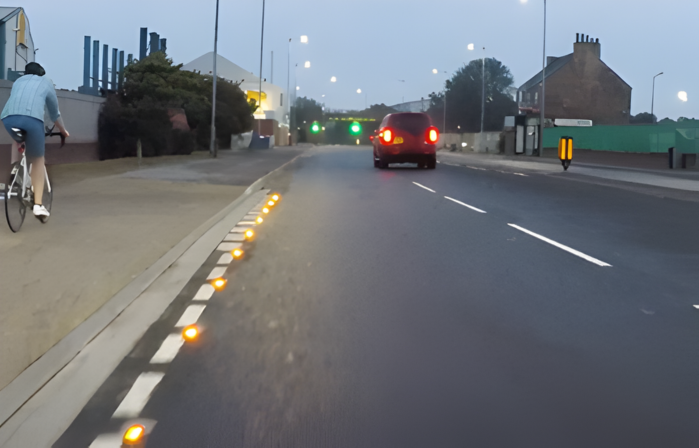
At five junctions, cyclist detection and classification technology was deployed to identify approaching cyclists. Detection triggers Illuminating Intelligent Road Studs, providing dynamic visual warnings to drivers while reinforcing safe positioning for cyclists. This targeted intervention addresses conflict risk at the point of greatest vulnerability.
Journey Time Monitoring sensors were installed along the corridor, with data integrated into Clearview’s Insight Data Management platform. Real-time journey time information is communicated directly to 18 Variable Message Signs (VMS) and to the council’s network management team. This enables proactive congestion management, improved incident response and informed route choice by drivers.
To prevent bridge strikes, five infrared over-height vehicle detection sensors were positioned upstream of the low bridge. When an over-height vehicle is detected, VMS warnings direct drivers to alternative routes, intercepting vehicles before they reach the structure.
The scheme reduced collision risk at key junctions, improving safety for cyclists and pedestrians. It lowered congestion and improved journey time reliability for freight, commuters and businesses. And it reduced infrastructure damage and associated costs linked to bridge strikes. Ultimately, this also meant improved air quality through smoother traffic flow and reduced stop-start conditions and strengthened resilience of a key industrial corridor supporting access to the Port of Hull.